
Fried, Baked and Air-Fried Samosas Compared
Deep-fried samosas tend to have a crisp, rich-tasting crust because the pastry cooks in hot oil; baked samosas avoid oil immersion and may develop a firmer, drier crust; and air-fried samosas use circulating hot air to produce a crisp crust with little or no added surface oil. The best method depends on your priority—richness, texture, oil use or available equipment—rather than a universal winner. Flakiness, total calories and cooking time also depend on the recipe, portion size and cooking conditions.
Cooking method decision map
Choose by the result you want
Follow the priority that matters most to you. Each option shows a likely benefit and a trade-off, not a guaranteed ranking.
-
Want a richer, classic oil-cooked crust?
Deep-fry
Immersion in hot oil can make the exterior crisp and give a fuller mouthfeel.
Trade-off: greater direct oil exposure; flakiness still depends on the dough.
-
Want to avoid oil immersion and use an oven?
Bake
Oven heat browns and sets the pastry without an oil bath.
Trade-off: the crust may be firmer or drier, depending on dough and surface oil.
-
Want no oil bath with a crisp hot-air finish?
Air-fry
Circulating hot air can crisp the pastry with limited added oil.
Trade-off: overcooking can dry the crust, while a crowded basket can brown unevenly.
Before comparing: keep dough, filling, size and starting state alike; changing these alongside the method makes crust differences harder to attribute to cooking technique. For speed, compare actual equipment and recipe settings—no method is always fastest.
Deep frying is the conventional reference, while baking and air-frying offer different heat-and-oil approaches. The sections below separate broad method tendencies from recipe-specific and appliance-specific outcomes.
Table of Contents
How the Cooking Methods Differ in Texture, Taste, Oil Use and Cooking Time
Compare fried, baked and air-fried samosas against the same four criteria: pastry texture, taste and richness, oil exposure, and cooking time and temperature. Each attribute tells you something different about the finished pastry.
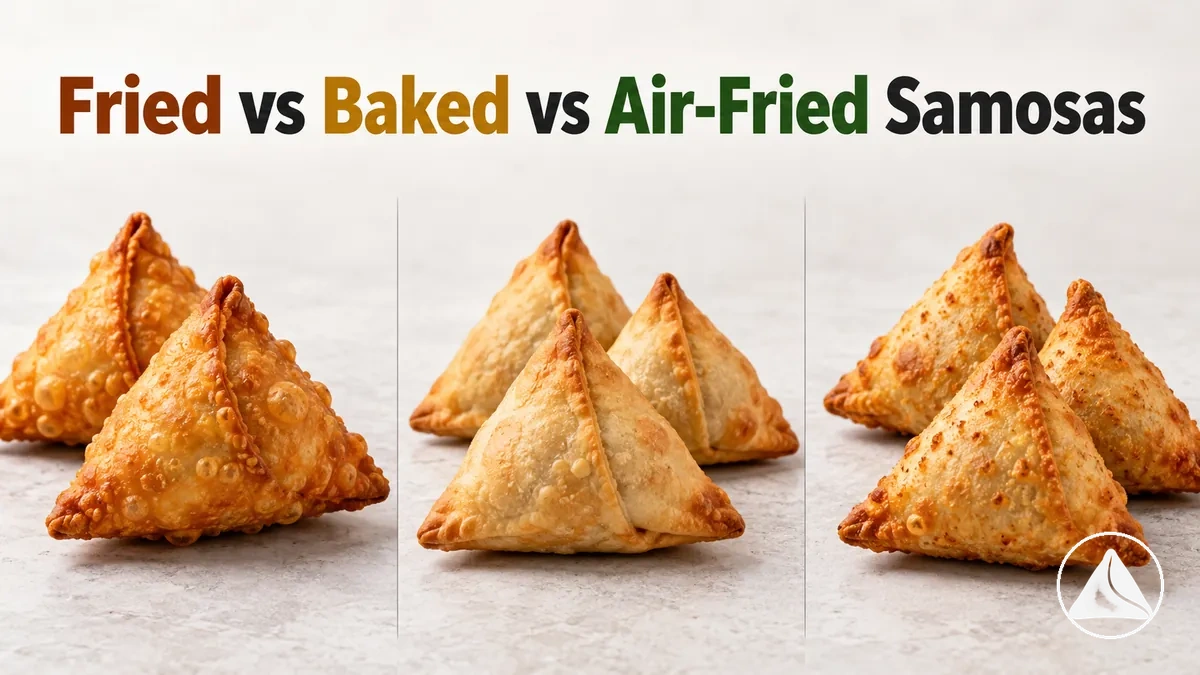
The image illustrates crust colour and browning; the table compares the methods using shared criteria rather than giving any method a universal ranking.

| Method | Texture tendency | Taste/richness | Oil exposure | Cooking time/temperature context |
|---|---|---|---|---|
| Deep-fried | Hot-oil immersion can produce a crisp exterior, with flakiness and dryness still influenced by the dough and frying conditions. | Direct oil contact can give the pastry a richer mouthfeel, while dough fat, seasoning and filling also affect perceived richness. | The pastry is immersed in hot oil, so oil exposure is direct; actual absorbed oil depends on the samosa and frying conditions. | Time and temperature depend on samosa size, starting state and frying conditions rather than one universal setting. |
| Baked | Oven heat can brown and firm the pastry, while crispness, flakiness and dryness depend on dough, surface oil and baking conditions. | The pastry can seem lighter or drier when less oil contacts the surface, although dough fat, seasoning and filling remain important. | Oil exposure usually comes from fat in the dough and any oil applied to the surface rather than oil immersion. | Time and temperature depend on samosa size, starting temperature, recipe and oven performance. |
| Air-fried | Circulating hot air can produce a browned, crisp surface, while dryness and flakiness vary with dough, airflow and basket loading. | Richness depends on dough fat and any added surface oil, so the sensory result is recipe- and equipment-dependent. | Oil exposure comes from fat in the dough and any oil applied to the surface rather than deep-oil immersion. | Time and temperature depend on appliance design, load, samosa size and starting state rather than one universal setting. |
These are method tendencies, not fixed results: dough composition, samosa size, starting temperature and equipment can change each attribute. The following sections separate the individual texture, taste, nutrition and timing questions.
Crispness, Flakiness and Pastry Texture
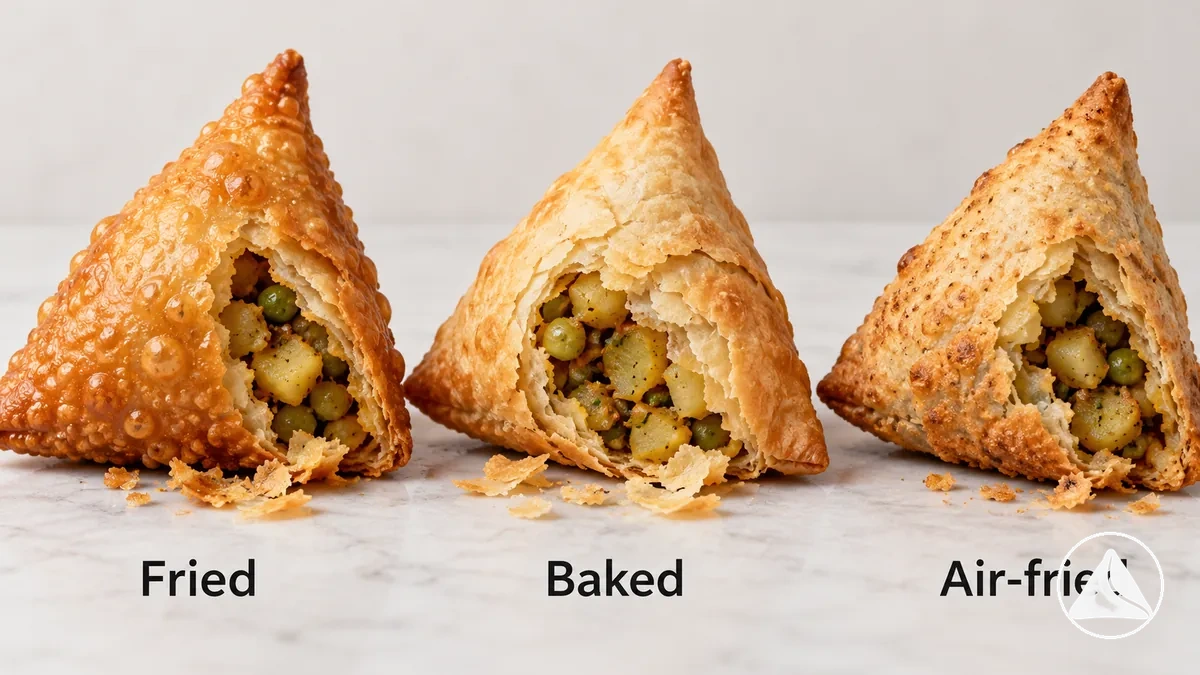
Crispness, flakiness and dryness are different texture attributes, not interchangeable measures of a good crust. The close-up image helps you compare visible surfaces and pastry fracture at a similar scale.
- Crispness
- A brittle crust that breaks readily under pressure. Both oil immersion and properly controlled hot-air cooking can produce it.
- Flakiness
- Thin pieces or layers that separate when the pastry breaks. Fat distribution, hydration and dough handling matter as well as cooking method.
- Dryness
- A lower sense of moisture in the crust. More moisture loss can increase dryness without necessarily creating more flakiness.
Hot oil and hot air change surface heating, moisture loss and the balance of crispness and dryness. In pastry, moisture can turn to steam while fat helps separate dough structures; water loss alone does not establish flakiness. A crisp samosa therefore need not be flaky, and a lighter-feeling crust can still be dry.
Maintaining crispness after cooking is a separate question from the texture produced by each cooking method.
Taste and Richness
Fried samosa pastry can have a richer mouthfeel because its crust contacts hot oil; baked or air-fried pastry may feel lighter or drier if less surface oil is present. These tendencies concern the crust, not a guaranteed difference in the filling's flavour.
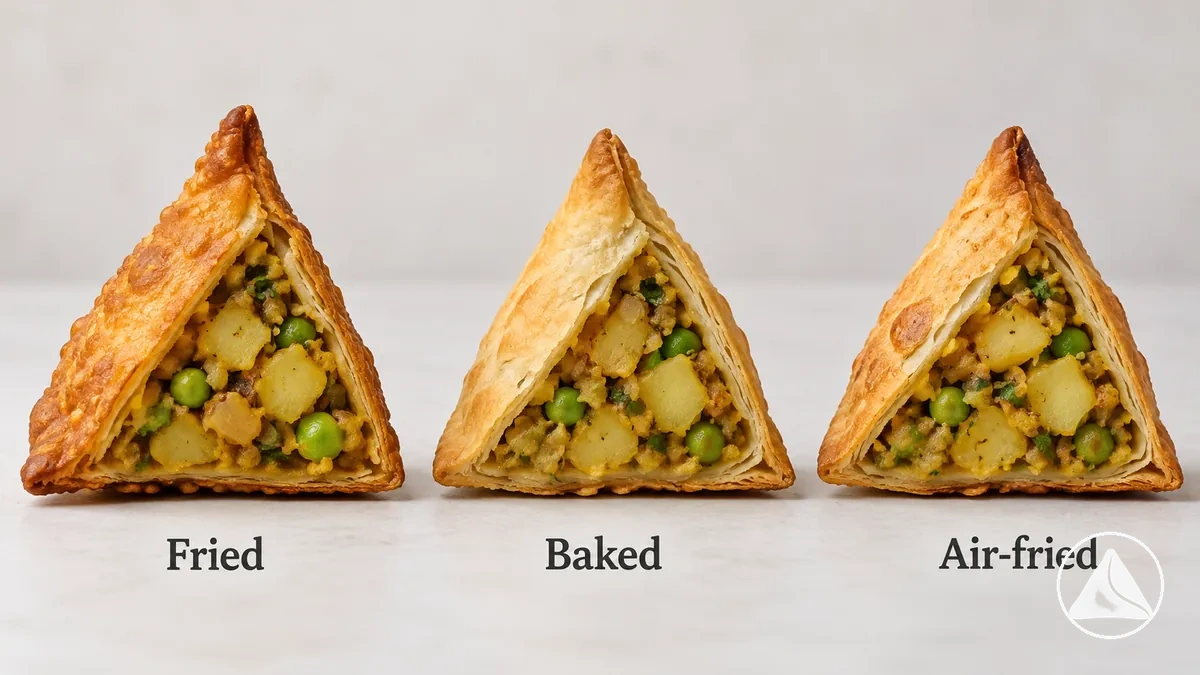
Crust colour, thickness and browning provide visual context, but appearance alone cannot establish taste or richness.
What shapes the taste of a samosa?
- Cooking oil
- Direct oil contact can add richness to the crust; actual absorption varies with the pastry and frying conditions.
- Fat in the dough
- Fat already mixed into the pastry changes flavour and mouthfeel in fried, baked and air-fried versions alike.
- Seasoning and filling
- Spices and filling ingredients shape the samosa's overall flavour even if the crust uses the same cooking method.
Compare methods using the same dough and filling to isolate crust differences. Personal preference still determines whether a richer, firmer or lighter-feeling pastry is more enjoyable; no method has a fixed taste advantage.
Oil Use, Fat and Calorie Differences
Cooking method affects how a samosa meets added oil, but oil exposure, absorbed oil, total fat and calories are different measures. Deep frying immerses the pastry; baking and air-frying cook primarily with hot air and may use a light oil coating.
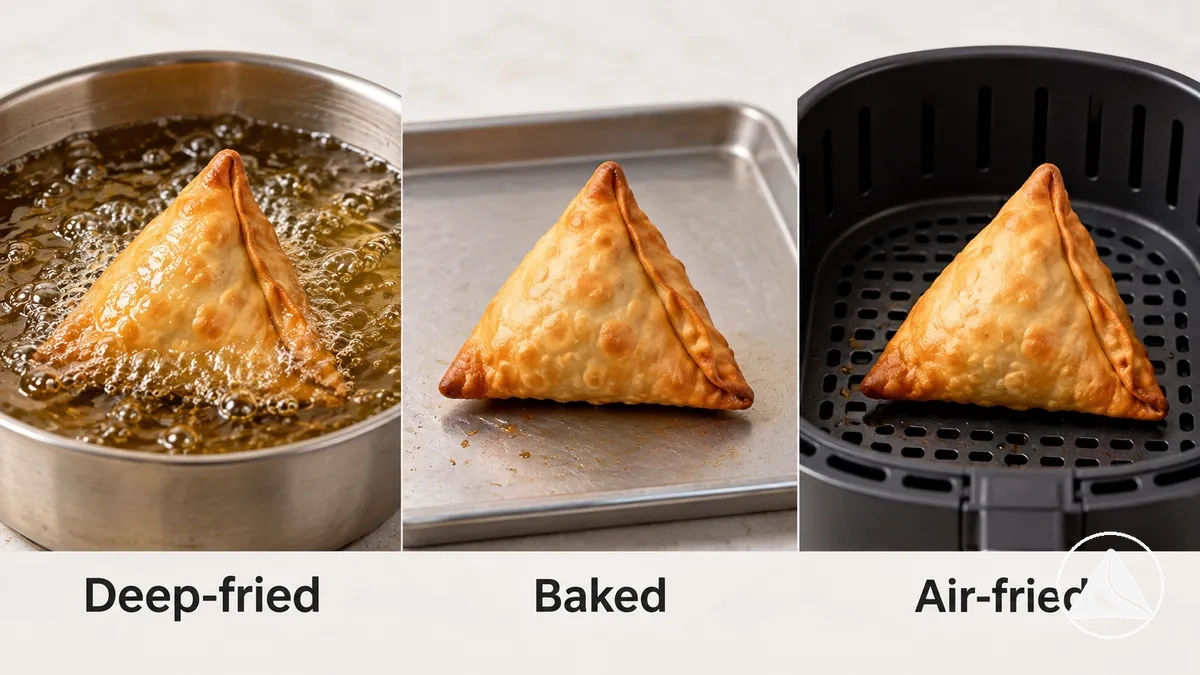
The illustration shows oil-contact patterns, not the amount of oil retained or a measured calorie difference.
- Cooking-oil contact
- Fried pastry is surrounded by hot oil. Baked and air-fried pastry avoid immersion, although brushed or sprayed oil still counts as added oil.
- Fat in the finished samosa
- Includes fat in the dough and filling plus any oil retained during cooking. Immersion can increase uptake, but contact alone cannot quantify absorbed oil.
- Calories per serving
- Depend on the whole recipe and portion size, including dough, filling and retained cooking oil—not just which appliance cooks the pastry.
Baking and air-frying can use less added cooking oil than deep frying. To calculate a meaningful difference in fat or calories, compare the same dough, filling and portion size, then account for oil actually retained—not simply the oil poured into a pan or fryer.
Without those measurements, do not assume a fixed percentage or calorie saving, or classify one cooking method as nutritionally superior on oil contact alone.
Cooking Time and Temperature Differences
Cooking time and temperature depend on the heat environment, samosa size, pastry thickness, starting state and equipment. There is no universal setting or consistently fastest method.
The ranges below are illustrative starting points for medium-sized, freshly assembled samosas with a fully cooked filling and preheated equipment. They are not matched experimental timings; use the recipe and appliance instructions for your particular samosas.
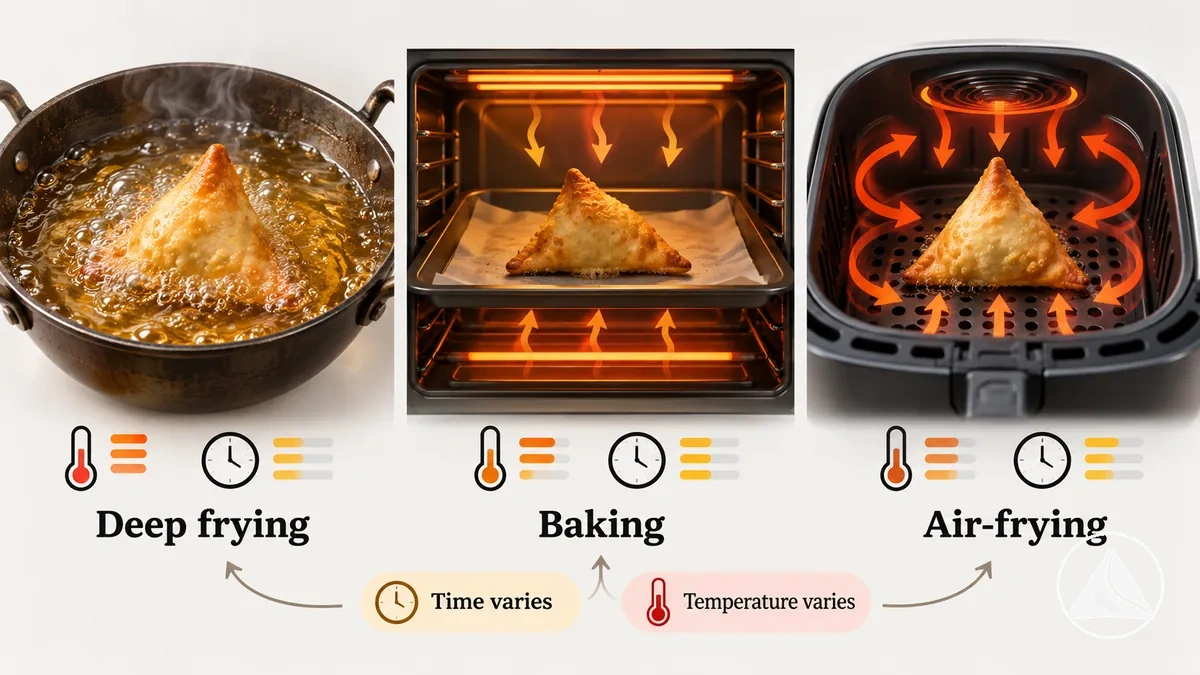
| Method | Heat environment | Time/temperature pattern | Doneness cue | Conditions that change it |
|---|---|---|---|---|
| Deep frying | Samosa immersed in hot oil. | Illustrative starting range for fresh medium samosas: 160–175 °C oil, often about 8–15 minutes; keep the heat steady and check the pastry. | Evenly golden and crisp, including thicker seams; pastry cooked through. | Oil temperature, samosa size and starting state. |
| Baking | Samosa heated in an oven by hot air and surrounding heated surfaces. | Illustrative conventional-oven starting range: 190–200 °C for about 20–30 minutes; a fan-forced oven may need a lower setting. | Browned and firm, with the pastry cooked through at folds and seams. | Oven type, samosa size, starting state and recipe. |
| Air-frying | Samosa exposed to circulating hot air in an air-fryer chamber. | Illustrative preheated air-fryer starting point: around 180 °C for about 12–18 minutes; check progress and allow room for airflow. | Evenly browned, crisp exterior and fully cooked pastry. | Appliance design, samosa size and starting state. |
Begin checking before the end of any approximate time range. Larger, thicker or frozen samosas can require a different setting or longer cooking; basket loading, oven type and oil-temperature stability also matter. A fully cooked pastry matters more than matching the clock.
A golden crust is a useful exterior cue but cannot confirm that an uncooked meat filling has reached a safe internal temperature. Where raw meat is used, verify the centre is safely cooked with a suitable food thermometer and ingredient-specific guidance.
How Baking and Air-Frying Compare with Deep Frying as Alternatives
Baking and air-frying both work as alternatives to deep frying, but neither produces an identical crust in every recipe. Deep frying remains the reference because the pastry cooks immersed in oil; the other two methods use hot air and usually avoid immersion.
The image distinguishes these heating environments without implying that one method is universally better.
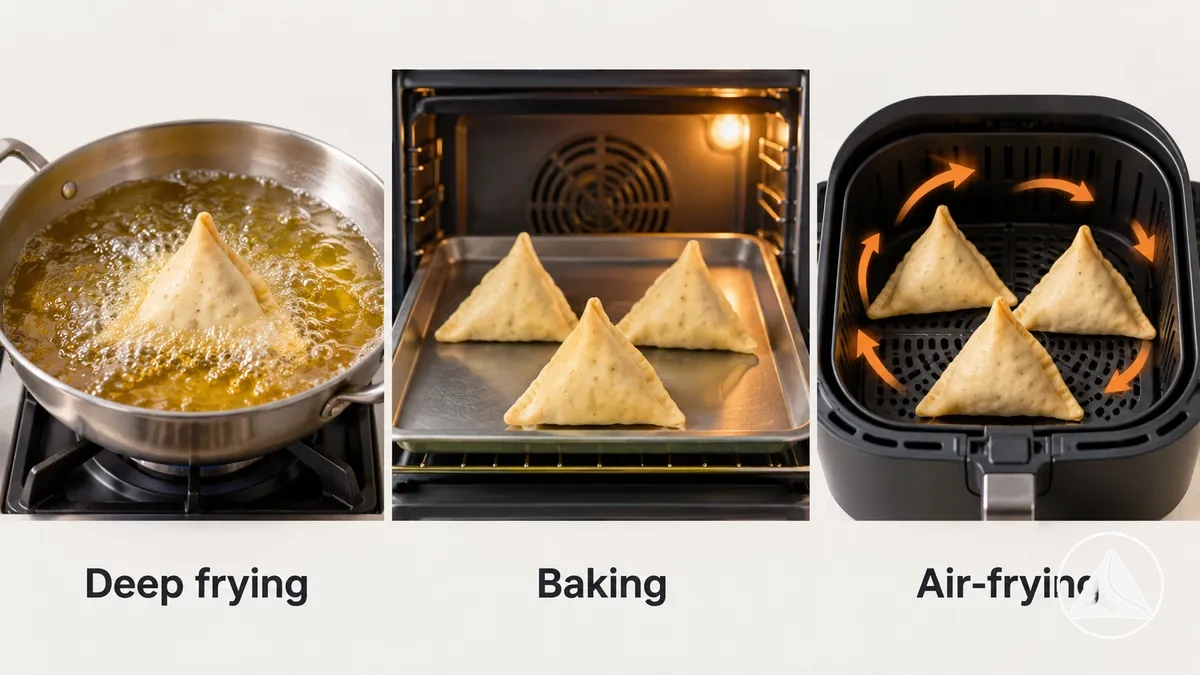
Baking suits a cook with an oven who accepts a different heat environment and a crust that may not mimic frying exactly. Its main differences from deep frying are:
- Baking compared with deep frying — Oil exposure: Baking avoids oil immersion and may use only a light amount of added surface oil.
- Texture and richness: The crust can become firm and browned, but it may feel less rich or comparatively drier than a deep-fried crust depending on the recipe.
- Cooking conditions: Oven temperature, heat circulation and samosa size influence how closely the baked result approaches the deep-fried reference.
Air-frying uses circulating hot air to cook and brown the pastry without an oil bath. It preserves the basic cooking function, with its own texture and loading trade-offs:
- Air-frying compared with deep frying — Oil exposure: Air-frying avoids oil immersion and may use only a light surface application of added oil.
- Texture and richness: The crust may become crisp while feeling lighter or drier than the deep-fried reference, depending on dough and surface oil.
- Cooking conditions: Airflow, basket loading, appliance design and samosa size affect the finished result and how closely it resembles deep frying.
Choosing a Samosa Cooking Method by Your Main Priority
Choose a samosa cooking method by the attribute you value most. Each priority below pairs a likely fit with its trade-off; the result can still change with recipe, equipment and starting state.
- Priority: greater flakiness and richness. Deep frying may be more suitable when direct oil contact and a richer pastry character are desired; the trade-off is greater oil exposure than baking or air-frying.
- Priority: lower added oil. Baking or air-frying may fit when avoiding oil immersion is important; the trade-off is that the crust texture and perceived richness can differ from deep-fried pastry.
- Priority: crispness with a potentially lighter crust. Air-frying may be preferable when circulating hot air and limited surface oil suit the desired result; the trade-off is that the crust can become comparatively drier depending on dough, loading and appliance conditions.
- Priority: oven-based cooking. Baking can fit when an oven is the available equipment and deep-oil cooking is not preferred; the trade-off is a different heat environment that can change browning, crust character and cooking time.
- Priority: cooking time or equipment constraints. The more suitable method depends on the available appliance, samosa size and starting state; the trade-off is that no method has one universally faster or simpler cooking pattern across all conditions.
Choosing among fried, baked and air-fried samosas means balancing richness, crispness, flakiness, added oil and cooking conditions. Test your preferred method using the same recipe and serving size rather than expecting one technique to win on every criterion.