
Why Samosas Become Soggy or Lose Crispness
Soggy or non-crispy samosa pastry usually points to one or more of four contributors: wet filling, overly soft dough, incomplete crisping during frying, or steam trapped after frying. If the shell is soft straight from the oil, check the dough and frying conditions first; if it starts crisp and softens later, check moisture and how the hot samosas were cooled or covered.
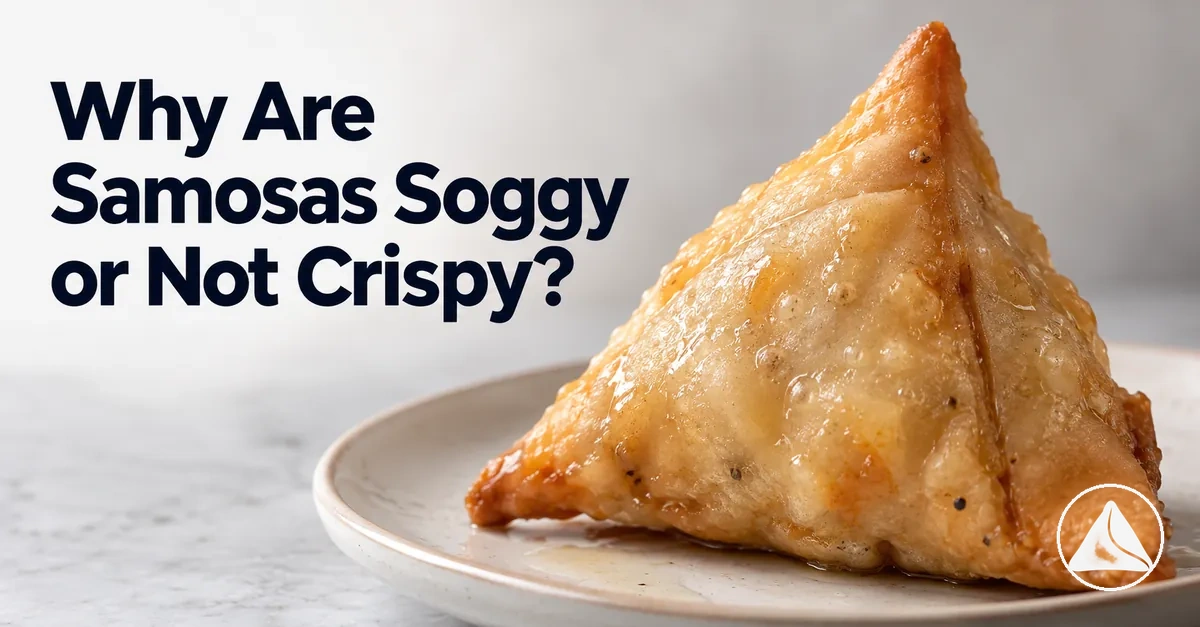
Samosa crispness troubleshooting
Match the softness pattern to your next check
Choose the observation that best describes the pastry shell, not the filling. Each route suggests possible causes, a distinguishing check and a practical adjustment.
Soft as soon as it leaves the oilThe outer pastry never becomes properly crisp.
- More plausible contributors
- Dough that is too soft, frying that does not fully crisp the shell, or wet filling in a local area.
- Check next
- Was the dough slack? Did the pastry brown before it firmed up? Is the filling visibly moist beside the soft section?
- Try in the next batch
- Make a firm, workable dough, let wet filling cool and dry, and fry with steady heat until the pastry itself feels crisp.
Crisp outside, soft beneath the crustThe soft layer is pastry between the exterior and the filling.
- More plausible contributors
- The exterior has crisped faster than the inner pastry, possibly with moisture from a wet filling.
- Check next
- Cut one open: is the soft part actually pastry, and is it close to visibly wet filling? Did the outside brown unusually quickly?
- Try in the next batch
- Reduce excess filling moisture and assess frying time and heat together, rather than judging readiness by colour alone.
Crisp at first, soft after standingThe pastry loses crispness after cooling, stacking or covering.
- More plausible contributors
- Retained steam and condensation around the hot pastry; filling moisture may also contribute.
- Check next
- Did the samosas soften after being covered or stacked while still hot, despite being crisp when removed from the oil?
- Try after frying
- Arrange the samosas in a single layer on a rack, leave them uncovered while steam escapes and avoid sealing them while hot.
Interpretation, not proof: More than one factor can be involved. Use the timing and location of softness alongside dough, filling and frying observations before changing a variable.
A naturally soft filling is not the same as soft samosa pastry. The distinction is whether the wrapper failed to crisp, softened next to moisture, or lost its initial crispness after frying.
Table of Contents
Main Causes of Soggy or Soft Samosa Pastry
Four sources can reduce a samosa shell’s crispness: filling moisture, dough hydration, frying conditions and post-fry steam. Their effects differ according to when softness appears and where it is felt.
The diagram locates each contributor in the preparation, frying or cooling stage.

- Filling moisture: A wet filling or one still releasing moisture as it cools can transfer moisture toward the surrounding pastry and contribute to local softness.
- Dough firmness and hydration: Overly soft or overhydrated dough can contribute to a pastry shell that remains softer after cooking instead of developing full crispness.
- Frying conditions: Unsuitable frying conditions can leave the shell incompletely crisp, while rapid browning can indicate that the exterior coloured before the pastry crisped through.
- Post-fry steam: Covering or closely stacking hot samosas can retain steam around the pastry, making later surface softening more plausible.
Timing helps narrow the cause: pastry that is soft from the outset suggests a preparation or frying issue, while pastry that becomes soft after initially crisping suggests retained moisture. Neither observation establishes a single cause on its own.
Excess Moisture from the Filling
Excess moisture can pass from the samosa filling into the wrapper, making pastry nearest the filling more likely to soften.
Check the contact area shown below, especially if the filling is wet or still releasing steam when the samosa is assembled.
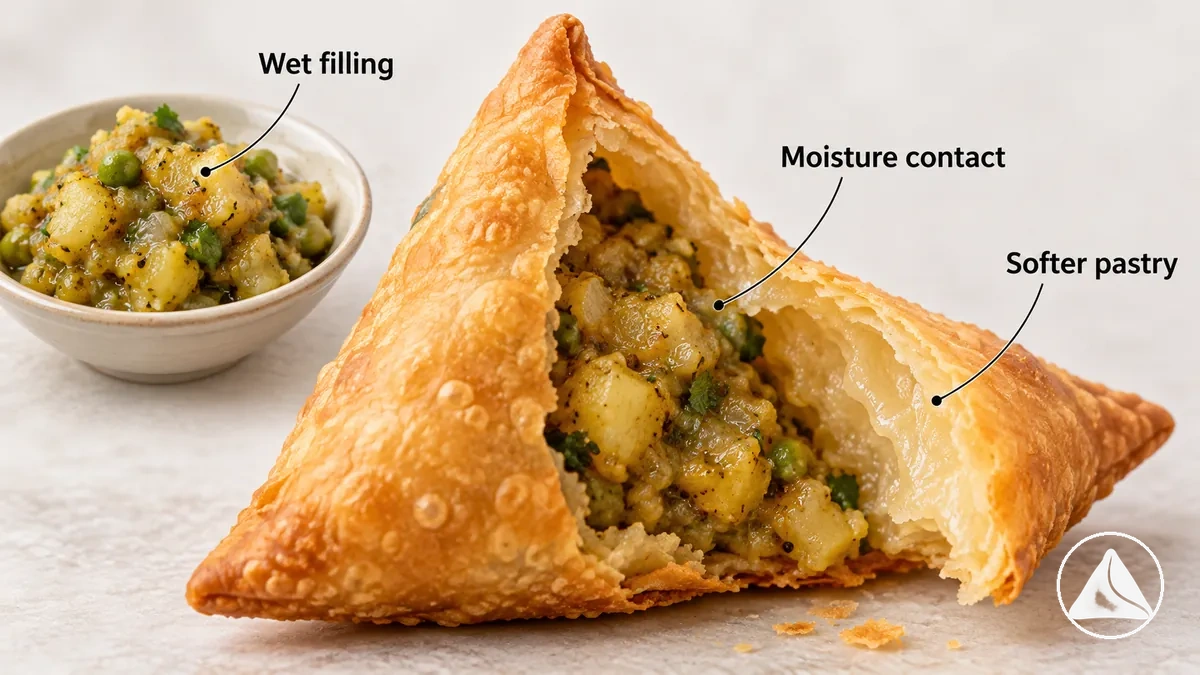
Key distinction: wet filling versus soft filling
- Wet, hot or moisture-releasing
- Visible free liquid or steam can dampen the pastry beside the filling. Cook off or drain excess liquid and let the filling cool before wrapping; then check whether local sogginess is reduced.
- Soft in texture but not wet
- A mashed or tender filling is not automatically a soggy filling. If it is cool and does not release free liquid, investigate dough texture and frying rather than assuming the filling is the cause.
Pastry that softens specifically next to a visibly wet filling is a useful clue, not proof that filling moisture is the only cause. Several contributors may overlap.
Soft or Overhydrated Dough
Overly soft or overhydrated samosa dough can make it harder for the wrapper to set into a firm, crisp shell during frying. The useful check is how the dough behaves when rolled and folded, not an assumed universal water quantity.
Compare the dough states below before shaping the next batch.
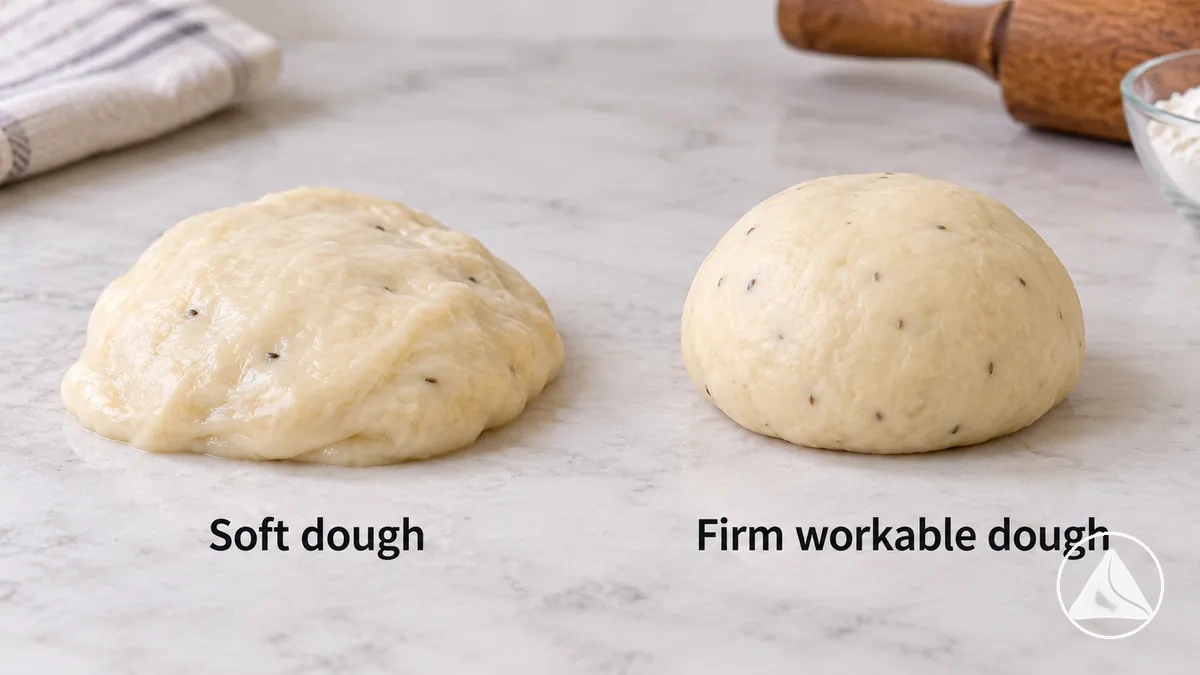
Dough feel: what to look for
- Too slack or sticky
- Spreads or loses its shape readily. Add water gradually in future batches, aiming to avoid a wet, loose dough; if needed, correct an already sticky dough with small flour additions.
- Firm yet pliable
- Holds its shape and can still be rolled and sealed without cracking. This is a more suitable starting state for a crisp samosa shell than an unusually soft dough.
Dough texture is one contributor, not a diagnosis on its own: a firm wrapper can still soften if the filling is wet, frying is incomplete or steam is trapped later.
Frying Conditions That Prevent the Pastry from Crisping Fully
Even good dough and a well-drained filling can produce soft samosas if frying conditions do not give the pastry time to crisp through.
Watch how the exterior colours and firms up during frying, not just the final colour of the shell.
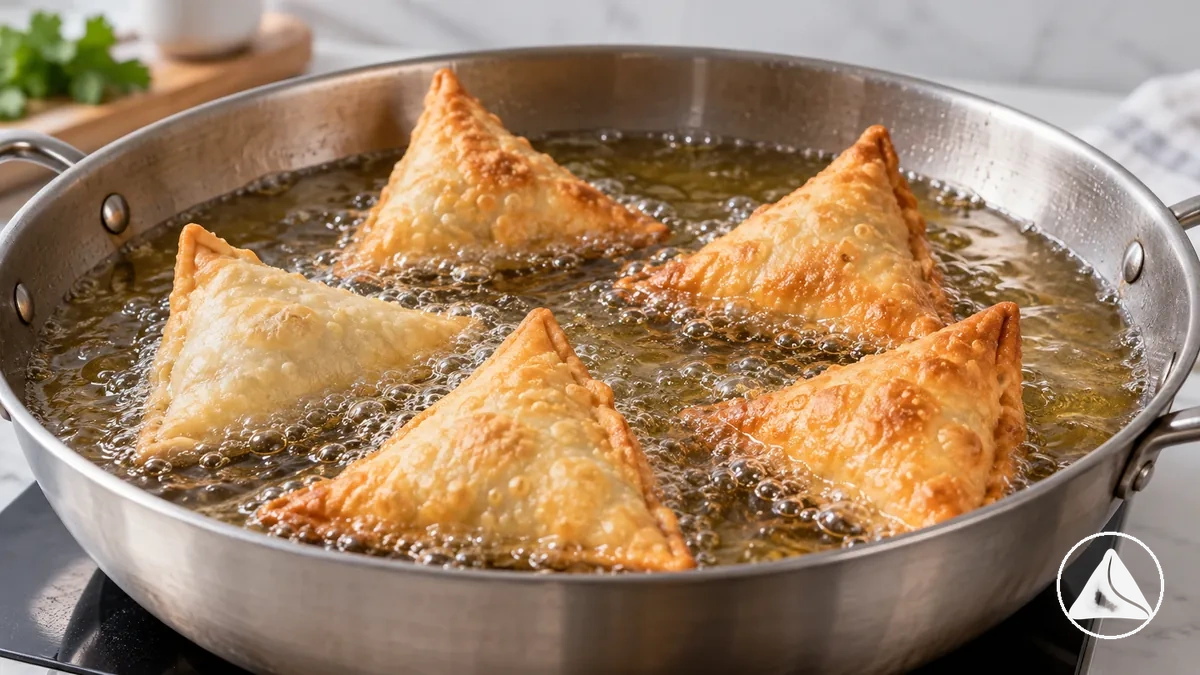
The practical variables are oil heat, frying duration and batch size. Look for steady bubbling and gradual, even colouring; oil that darkens the outside almost immediately may be too hot for the pastry to cook evenly.
- Oil-temperature behaviour: If the shell browns quickly yet remains soft underneath, reduce excessive heat and allow gentler, more even frying. Colour development alone does not establish crispness.
- Time in the oil: Removing the samosas while the pastry still feels pliable can leave an incompletely crisp shell. Give the wrapper time to become firm as well as golden.
- Batch size and heat recovery: A crowded pan can cool the oil and slow crisping. Fry in smaller batches so bubbling and heat remain more consistent.
Use texture, colour and frying behaviour together. Rapid browning or softness after removal makes the frying stage worth checking, but no single cue proves the cause. Adjust one frying variable at a time and compare the outcome.
Trapped Steam After Frying
Covering or closely stacking hot samosas can restrict steam escape. Moisture remaining against an initially crisp shell may make the pastry soften after frying.
This is most plausible when the samosas were crisp as they left the oil but softened after cooling, covering or stacking.
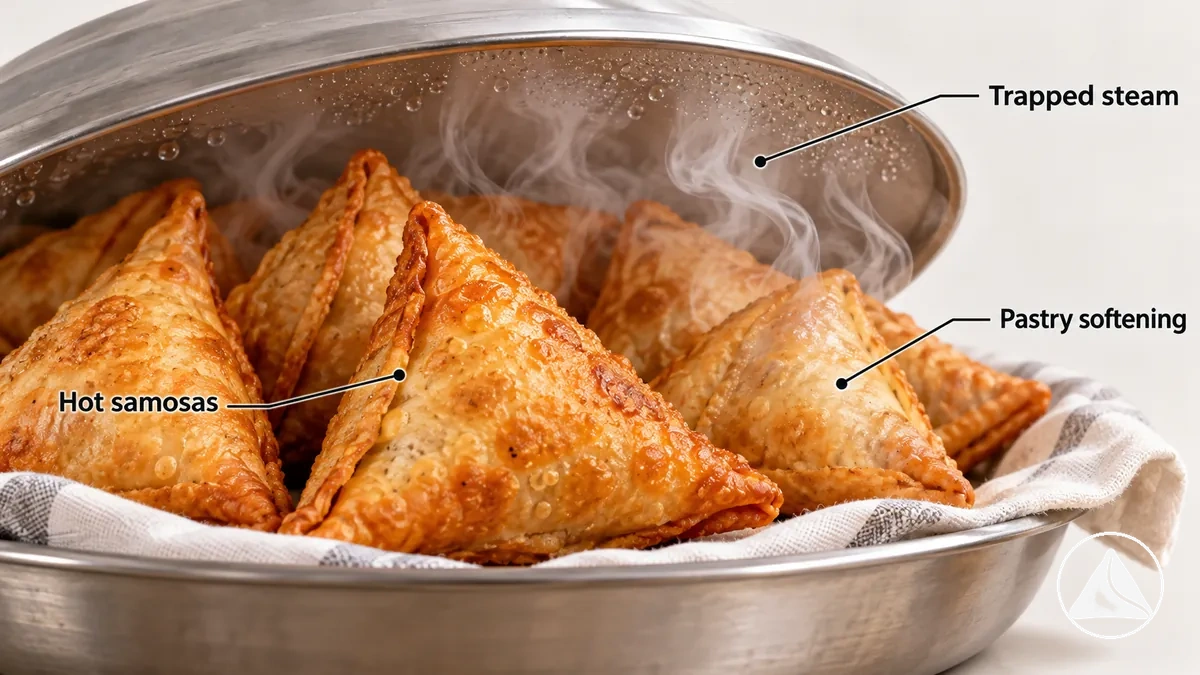
Post-fry handling: three useful steps
- Drain and separate. Move fried samosas to a rack in a single layer so excess oil can drain and steam is not held under the pastry.
- Let steam escape. Leave them uncovered while hot; avoid tightly stacking or wrapping them straight from the oil.
- Pack only after cooling. Once steam has dispersed, choose storage that avoids trapping condensation against the crust.
Later softening suggests post-fry moisture more strongly than a shell that was already soft in the oil, but the timing is a clue, not confirmation. Not every covered batch softens equally.
How to Diagnose Why the Pastry Is Soft
To diagnose soft samosa pastry, start with two observations: when crispness was lost and which part of the pastry is soft. Then compare dough feel, filling wetness, frying behaviour and cooling conditions.
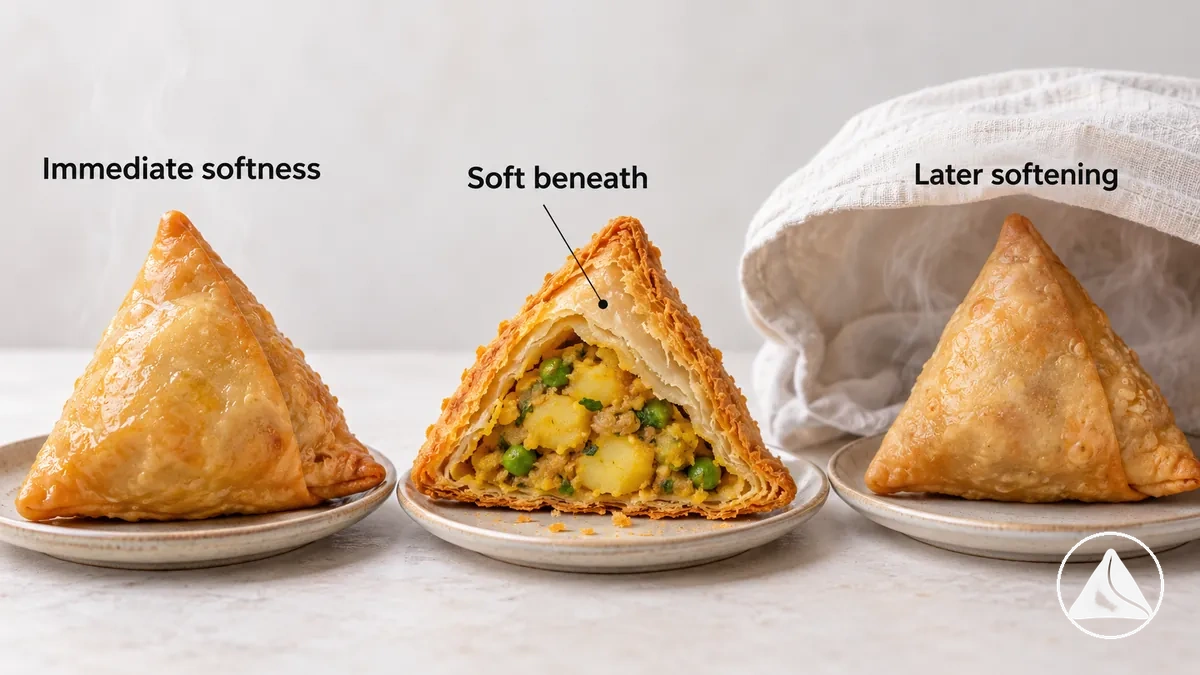
These three timing-and-location patterns suggest the next check rather than a certain cause. Softness near wet filling can indicate moisture transfer; a shell soft straight from the oil calls for dough and frying checks; later softening makes trapped steam more plausible.
- Soft immediately after frying: Check whether the pastry shell lacks surface crispness from the outset, then compare dough softness and frying cues. This pattern is more consistent with a dough or frying-related contributor than with later post-fry softening.
- Crisp outside but soft beneath the surface: Check where the softer layer sits and whether filling wetness is concentrated near that area. Softness close to the filling points more strongly toward a local moisture-related contribution than a uniformly soft outer surface.
- Crisp at first, then soft after standing or covering: Check whether the texture changed after covering, stacking, or standing. Later softening after clear initial crispness is more consistent with retained moisture around the pastry, but it remains an interpretation rather than confirmation.
Soft Immediately After Frying
Softness immediately after frying suggests a condition present before or during frying, not steam that accumulated later. Compare whether the dough was too slack, the filling released liquid or the shell browned without crisping fully.
- Dough texture: Noticeable dough softness makes an overly soft or overhydrated dough condition more plausible.
- Filling wetness: Visible filling wetness, especially beside locally soft pastry, suggests that filling moisture may be contributing.
- Frying behavior: Rapid browning without corresponding surface crispness, or pastry that remains soft during frying, points toward the frying conditions as a plausible contributor.
- Crisp shell formation: If no crisp shell formed at all, the timing is less consistent with trapped steam as the primary explanation.
These observations can overlap. Change one likely variable at a time in a future batch—dough firmness, filling moisture or frying behaviour—so the effect on crispness can be assessed rather than guessed.
Crisp Outside but Soft Beneath the Surface
A samosa can have a crisp exterior while the inner pastry layer remains soft. That is different from a naturally tender filling: the question is where the change in texture occurs.
Follow the layers from outside to inside
- Outer pastry
May feel crisp and look golden. Surface colour does not show whether the pastry beneath is fully crisp.
- Inner pastry
Softness between the crust and filling suggests uneven crisping or moisture within the wrapper.
- Filling
A soft filling is often expected; it is only a pastry problem if moisture reaches and softens the wrapper.
Cut one open or check the texture of a bite to locate the softer layer. If the exterior browned quickly, incomplete crisping could contribute; if the filling is wet beside that layer, moisture transfer could also contribute.
Location is a useful clue, not proof. Browning, inner-shell cooking and filling moisture may overlap, so avoid deciding on a cause from a crisp outer surface alone.
Crisp at First, Then Soft After Standing or Covering
When a samosa is crisp immediately after frying but soft later, moisture retained during cooling is a more plausible first check than dough or frying that never produced a crisp shell.
Notice whether the change followed standing, stacking, covering or packing the samosas while hot. Steam trapped close to the pastry can condense and reduce crispness; the timing is an indicator, not proof that steam is the only contributor.
If the pastry remains soft even after cooling uncovered, revisit filling moisture, dough and frying conditions as well. For holding or storage, allow steam to escape before packing rather than sealing the samosas while hot.
Correcting Soggy Samosas Based on the Cause
Match the adjustment to the observed failure. Wet filling, slack dough, uneven frying and trapped steam have different corrective directions, even though more than one may contribute to soft pastry.
Use the symptom and the next check in the table before changing a variable. Test whether the pastry actually becomes or remains crisper, rather than relying on colour alone.
| Symptom or Timing | Likely Cause | What to Check | Corrective Direction |
|---|---|---|---|
| Pastry is soft near a visibly wet filling | Excess filling moisture | Check whether the filling is still releasing moisture or wetting the surrounding pastry | Cook off or drain free liquid and cool the filling before wrapping; then check whether the pastry beside it stays crisper |
| Pastry is soft immediately after frying and the dough was notably slack | Overly soft dough | Check dough softness and whether the shell lacked firmness before frying | Mix a firm but pliable dough, adding water gradually; compare the finished shell in the next batch |
| The exterior browns but the pastry remains soft or incompletely crisp | Incomplete or uneven frying | Check frying behavior, cooking duration, batch conditions, and whether the shell crisped through | Fry smaller batches with steadier heat until the shell crisps through; judge texture as well as colour |
| The samosa is initially crisp but becomes soft after covering or stacking | Trapped post-fry steam | Check whether steam and moisture were retained around the hot pastry | Cool uncovered in a single layer on a rack before covering or packing; check whether later softening is reduced |
Swipe or scroll sideways to read all four comparison columns.
Two different goals: prevention and restoration
- For the next batch: prevent softness
- Reduce filling moisture, aim for firm workable dough, fry with steady heat and give steam a way out after cooking. Change one likely factor first so the result can be checked.
- For an already-cooked samosa: restore what you can
- Reheating uncovered in an oven or air fryer may help a suitable shell become crisper. Heat it through and check the pastry texture; reheating does not undo wet filling or overly soft dough used in the original batch.
If crispness is lost only after cooling or packing, prioritise steam escape and holding conditions. If the shell never crisped, focus on the preparation and frying stages first.